Why Are So Many Adults Choosing to Fix Their Smile Later in Life?
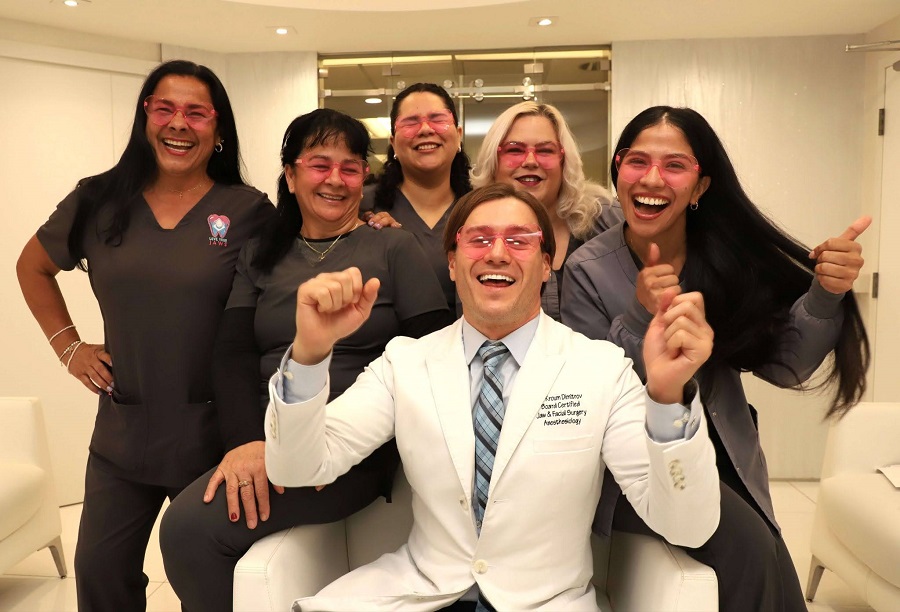
More adults than ever are addressing smile concerns they set aside for years, and the reasons are both practical and personal. Advances in technology, greater access to care, and a deeper connection between oral health and overall well-being have all contributed to this shift.
In this article, we explore what is driving the trend and what treatment options are available.
The Rise of Adult Smile Correction: Why Now?
The decision to address long-standing dental or jaw concerns is no longer seen as something reserved for younger patients, and that shift in perspective reflects a broader change in how adults think about oral health.
For many people, a functional and healthy smile is now understood as a quality-of-life issue rather than a purely cosmetic one, which has made the conversation around adult smile correction more open and more widely pursued.
As awareness has grown, so has the number of adults who are choosing to explore their options rather than continue managing the discomfort or self-consciousness that comes with untreated dental concerns.
The practical barriers that once held many adults back have also changed in meaningful ways. The wider availability of financing options and phased treatment plans has made procedures that once felt financially out of reach more accessible to a broader range of patients.
According to experts like board-certified oral and maxillofacial surgeon Dr. Kroum Dimitrov, who leads the surgical team at Love Your Jaws, a reputable oral surgery clinic, the patient-centered approach has contributed most to this shift. Experts like Dr. Dimitrov offer adults a combination of advanced technology, thorough consultation, and transparent financial guidance that enables them to pursue care with confidence.
Greater access to information through online resources has also helped adults understand their options in a way that was simply not available to previous generations.
Common Reasons Adults Seek Smile Correction Later in Life
The specific circumstances that bring adults to consider smile correction vary widely, but several patterns appear with notable consistency. Progressive tooth loss caused by decay, gum disease, or injury is one of the most common drivers, as missing teeth affect not only appearance but also bite function, jawbone density, and overall facial structure over time.
Adults who have lived with untreated jaw misalignment since adolescence often reach a point where the long-term consequences, including chronic jaw pain, difficulty chewing, TMJ disorders, and disrupted sleep, become significant enough to prompt action.
Long-standing aesthetic concerns also bring a significant number of adults into consultation for the first time. Crowded, gapped, or misaligned teeth that were never corrected in childhood, a gum line that shows too much tissue when smiling, or a bite that has gradually shifted over years of wear are all concerns that adults describe as affecting their confidence in professional and social settings.
For many patients, the decision to finally address these issues is not about reaching a breaking point but about arriving at a stage of life where they feel informed, motivated, and ready to invest in a change they have wanted for a long time.
The Procedures Most Commonly Chosen by Adult Patients
Adults seeking smile correction today have access to a wider range of surgical and restorative options than any previous generation, and the procedures they choose most often reflect a combination of functional need and aesthetic goals.
The following are the treatments that oral surgeons see adult patients requesting most frequently:
- Dental implants: The gold standard for tooth replacement, implants replicate the structure and function of a natural tooth more closely than any other solution. For patients with extensive tooth loss, full-arch restoration options such as All-on-4 implants and implant-supported overdentures restore both function and appearance through a single, integrated treatment plan.
- Bone grafting and sinus lifts: These preparatory procedures rebuild jawbone volume that has diminished over time, creating a structurally sound foundation for implant placement in patients who would not otherwise qualify.
- Corrective jaw surgery: Also known as orthognathic surgery, this procedure addresses skeletal jaw misalignment, bite dysfunction, and facial asymmetry, while also improving airway function in patients whose jaw structure contributes to sleep-disordered breathing.
- Gummy smile correction: A surgical option for patients whose gum line shows too much tissue when smiling, producing a more balanced and proportional appearance.
- Periodontal plastic surgery: Used to reshape and refine the gum line, this procedure is often combined with other restorative treatments as part of a comprehensive smile restoration plan.
Each of these procedures can be pursued independently or as part of a multi-stage treatment plan, depending on the patient's specific clinical needs and aesthetic goals.
Why Adult Patients Are Well-Positioned for These Procedures?
One of the most underappreciated advantages that adult patients bring to smile correction is the clarity of their motivation. Adults who choose these procedures are doing so from a place of personal readiness and fully informed decision-making, without the external pressures or timing constraints that can complicate treatment in younger patients.
That level of commitment has a meaningful effect on outcomes, because patients who understand their goals and are genuinely invested in the process tend to follow pre-operative and post-operative instructions with greater care and attention.
From a clinical standpoint, fully developed adult bone offers specific advantages that are sometimes overlooked in the broader conversation about age and oral surgery. Dental implants depend on a process called osseointegration, in which the implant fuses with the surrounding jawbone over a period of several months, and this process is highly reliable in adult patients with adequate bone density.
The stability of adult facial and jaw anatomy also makes surgical planning more predictable, particularly when supported by advanced 3D imaging technology that allows surgeons to map the procedure with sub-millimeter accuracy before the first incision is made.
What the Process Looks Like: From Consultation to Results
Understanding what to expect before treatment begins makes the entire experience more manageable and reduces the uncertainty that keeps many adults from taking the first step. While timelines vary depending on the procedures involved, the process generally follows a consistent progression:
Step 1: The Initial Consultation
The process begins with a comprehensive consultation that includes a clinical examination, advanced imaging, and a detailed conversation about the patient's goals, concerns, and medical history. The surgeon will assess candidacy for the procedures being considered and explain the recommended treatment approach in full before any commitment is made.
Step 2: Diagnostic Imaging and Treatment Planning
3D cone beam CT imaging and intraoral scanning are used to build a precise picture of the patient's jaw structure, bone density, and anatomy. This information forms the foundation of a personalized surgical plan designed around the patient's specific clinical needs and aesthetic goals.
Step 3: Preparatory Procedures, If Needed
Some patients require bone grafting or pre-surgical orthodontic work before the primary procedure can begin. These preparatory steps ensure that the conditions for a successful outcome are in place, and the timeline for each is discussed in full during the consultation.
Step 4: The Surgical Procedure
The primary treatment is carried out according to the finalized surgical plan, whether that involves implant placement, corrective jaw surgery, smile correction, or a combination of procedures. Advanced surgical technology, including robotic guidance where applicable, supports accuracy and a minimally invasive approach throughout.
Step 5: Recovery and Follow-Up
Recovery timelines differ by procedure. Dental implants require a three-to-six-month osseointegration period, corrective jaw surgery involves a structured multi-month recovery, and soft-tissue smile correction procedures typically involve a shorter and less demanding healing window. Follow-up appointments allow the surgical team to monitor healing, address any concerns, and confirm that the outcome is progressing as planned.
Financing and Accessibility: Removing the Barriers That Held Patients Back
For many adults, the primary barrier to pursuing smile correction has never been a lack of interest. It has been uncertainty about cost and payment logistics. The availability of flexible financing plans, phased treatment options, and insurance coordination has changed that picture considerably for patients who might otherwise delay care without a clear sense of what it would cost them.
Understanding the financial structure of a treatment plan from the outset gives patients the clarity they need to make a decision based on full information rather than unexamined assumptions.
What many adults do not fully account for is the long-term cost of inaction. Delayed treatment for tooth loss, jaw misalignment, or deteriorating dental function rarely remains static: bone loss progresses, surrounding teeth shift to fill gaps, and the complexity and cost of eventual treatment tend to increase with each passing year.
Conditions that feel manageable today can become significantly harder to address five or ten years from now, which means that the financial and clinical case for timely treatment is often more compelling than it appears at first glance.
It’s Never Too Late to Invest in a Healthier, More Confident Smile
Fixing a smile as an adult is not about chasing a younger appearance. It is about addressing conditions that affect function, comfort, and quality of life in ways that accumulate over time without resolution. The combination of advanced surgical technology, experienced oral surgeons, and increasingly accessible financing has made adult smile correction safer, more precise, and more achievable than at any previous point in the history of the specialty.
For adults who have spent years managing discomfort, self-consciousness, or declining dental function, the most valuable thing to understand is that the right time to pursue care is not determined by age but by access to the right information, the right provider, and a clear sense of what a healthier smile would make possible in daily life.